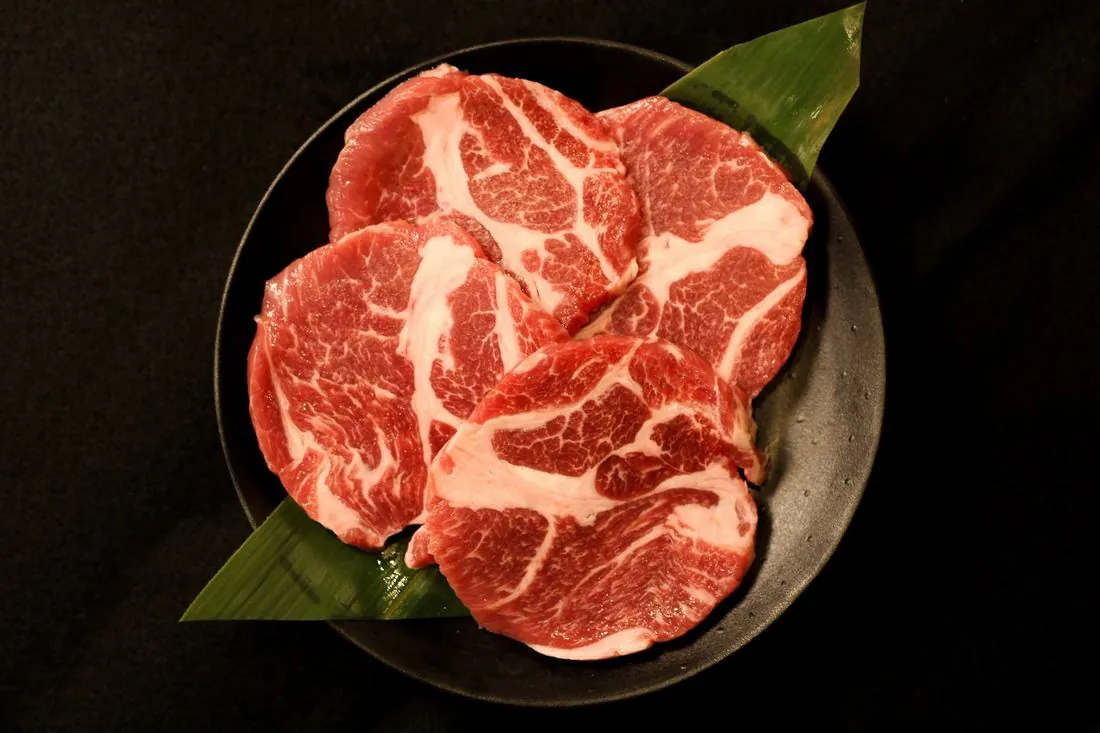
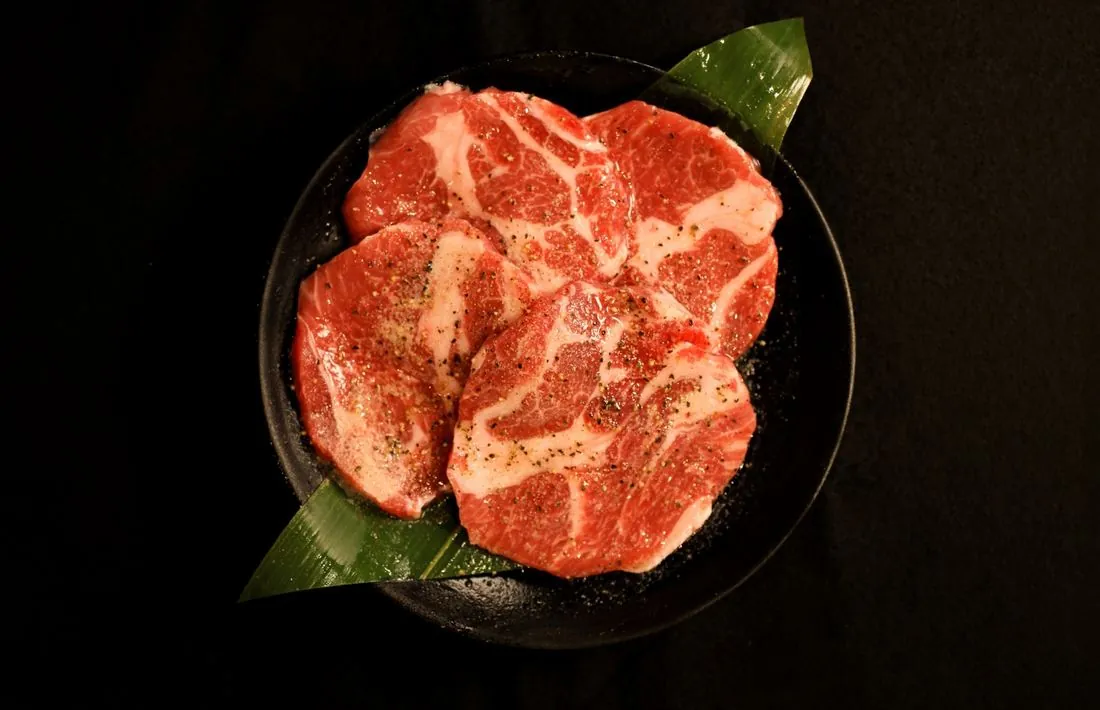
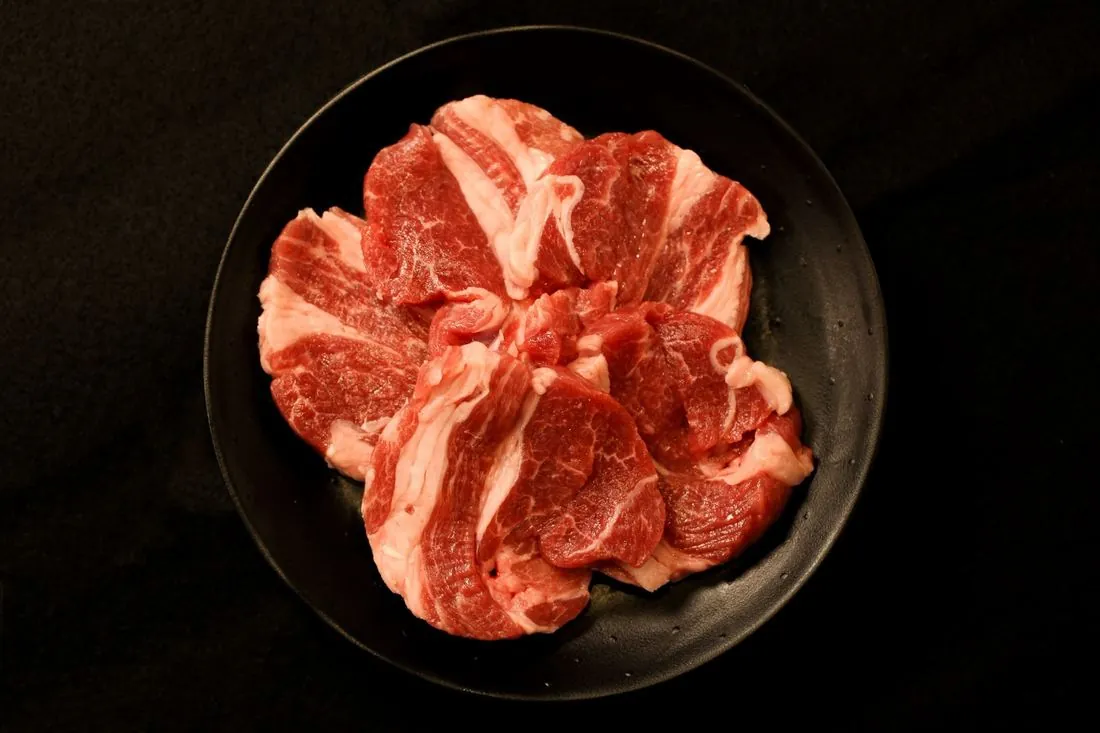
Never frozen. Salt-aged. Grilled over binchotan.
People avoid jingisukan for two reasons: the smell and the toughness. We set out to remove both before the meat ever reaches the grill. We use only never-frozen chilled lamb, salted with sea salt from Rausu in Hokkaido and rested for at least two days.
One. We never freeze it
The characteristic aroma of lamb is attributed to fatty acids in the fat, such as 4-methyloctanoic acid. Each cycle of freezing and thawing oxidises that fat further, and the aroma grows stronger. We take our lamb chilled and never freeze it, so nothing is lost to drip on thawing.
Frozen lamb is excellent for logistics. It keeps for months and travels anywhere. But once meat has been frozen, its cells rupture on thawing and the flavour runs out with the water. That red liquid pooling under the plate is exactly that.
So we buy in a way that does not rely on a freezer. Deliveries come four to five times a week, only as much as we will use. We hold no stock, and in exchange we have no reason to freeze. Many places put the words "fresh lamb" on the sign; whether the words hold depends on how many days before service the meat arrived.
Two. We came back to salt
We salt the lamb with sea salt from Rausu, on the Shiretoko peninsula, and rest it for at least two days. Salt draws out surplus moisture, and in that time the enzymes already in the meat go quietly to work. It is not salt for seasoning. It is salt for buying time.
We took a long way round to get here. Marinating in shio-koji. Smoking. Steeping in sauce. There is no shortage of ways to change a flavour, and we tried most of them. Each one tasted good enough — and each one painted over the aroma of the lamb along with everything else. It made a nonsense of insisting on never-frozen meat in the first place.
In the end only the salt remained. It was the one method that drew the lamb out instead of adding to it.
We chose Rausu because it is the salt of a sea where kombu grows. Rausu, on the Shiretoko coast, is known for Rausu kombu, and it is the salt taken from that seawater that we use.
The resting is done cold and slowly. Hurry it and the salt only tightens the surface. Two days was not a figure we were able to shorten.
Three. Shichirin and binchotan
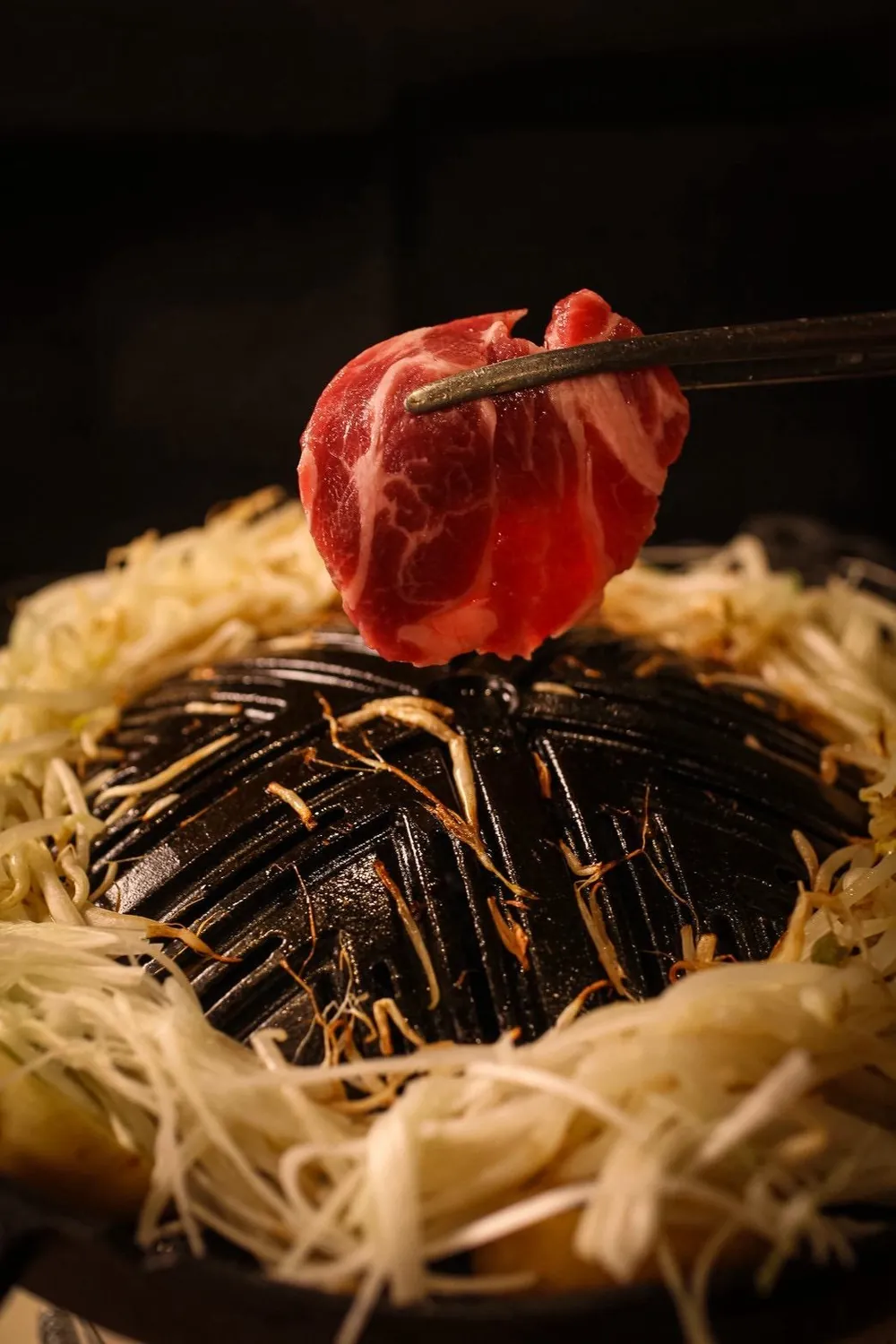
Every table has a shichirin brazier, and we burn binchotan charcoal.
A gas flame heats the air first, and that heat reaches the meat second. Charcoal does not work that way. The radiant heat the charcoal itself gives off strikes the surface of the meat directly, so the surface sets quickly and the moisture stays inside. Binchotan burns steady and long, so the last slice cooks like the first.
Grill one side at a time and do not keep turning it. That alone makes the same meat tender. The less you move it, the less the cooked face cools.
Four. Why we age it
Why it becomes tender — Meat is said to soften because calcium ions and proteolytic enzymes weaken the structure of the myofibrils within the muscle. The longer the time, the further that process goes. Stored at 4°C after slaughter, the usual guideline is about ten days for beef and three to five days for pork. We rest our lamb, salted, for at least two days.
Why it tastes deeper — As those same proteases break down the proteins, peptides and amino acids that carry umami increase.
Why it does not smell — The fatty acids held responsible for the smell of mutton, such as 4-methyloctanoic acid, grow stronger as the fat oxidises. Kept chilled through distribution, that oxidation is held back and the aroma stays mild.
Sources: Japanese Society for Meat Science and Technology, "Meat Ageing" (mechanisms of tenderisation and umami formation; guideline ageing periods by species); Jingisukan Anbe, "What is fresh-lamb jingisukan?" (compounds behind the aroma of lamb; freezing, thawing and fat oxidation). The ageing period and preparation described here are Rikyu's own.
Five. Taste all three
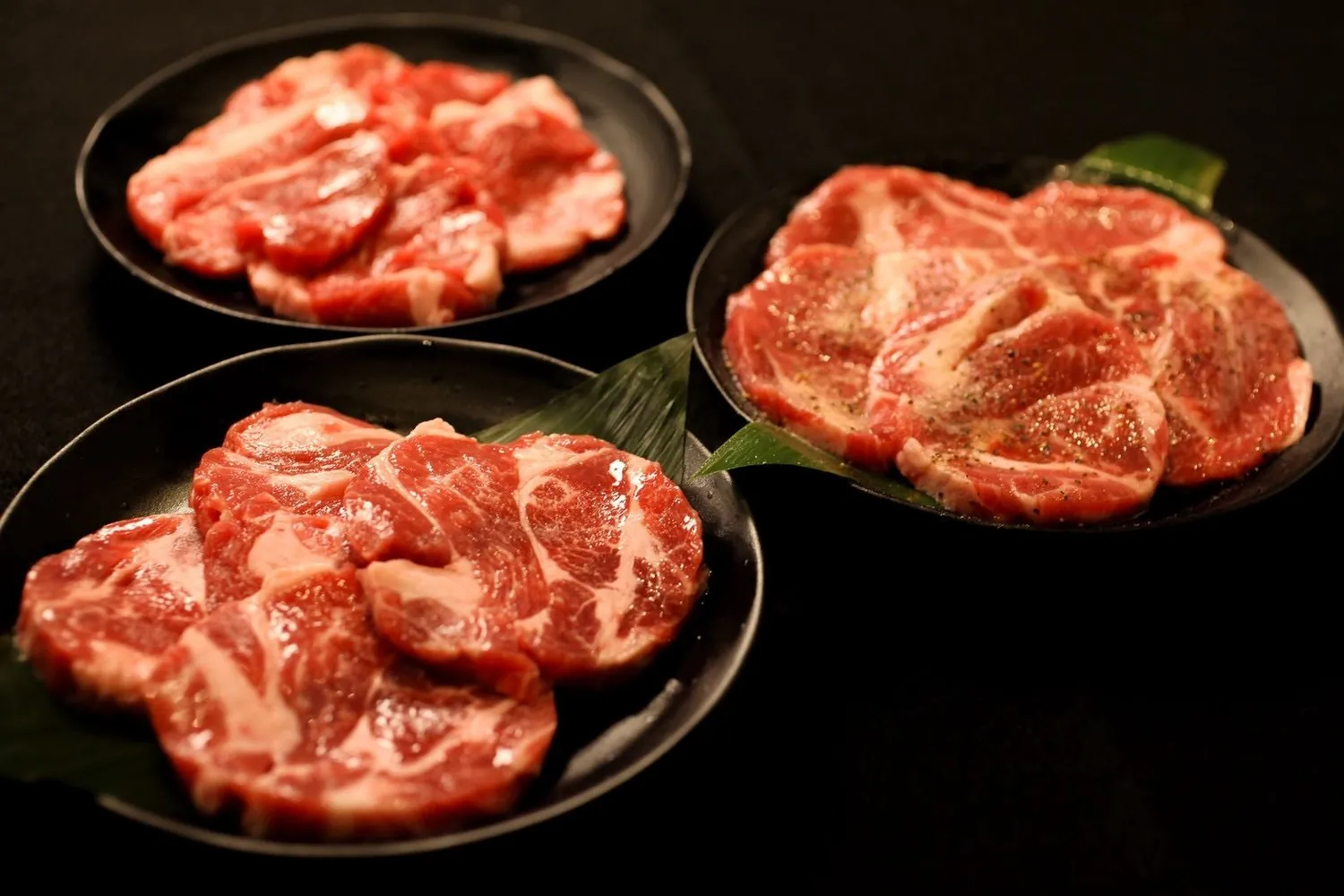
The same animal becomes a different dish depending on the cut and the preparation. We keep all three on the menu so you can taste them side by side.
- Rikyu Salt-Aged Lamb Shoulder¥1,680
- Premium Salt Jingisukan¥1,880
- Salt-Cured Lamb Loin¥1,480